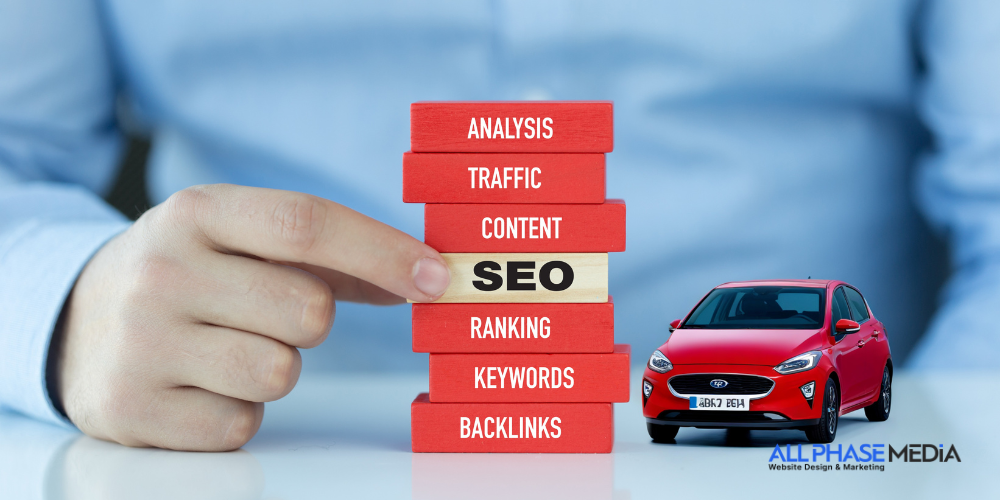
With all the changes in how we find information online, especially the rise of AI, you might wonder what still works for getting noticed. One such strategy under scrutiny is blogging. In an era where AI-generated answers and instant information seem to dominate, the question remains: are blogs important for SEO?
To find out if blogs are important for SEO in this age of AI, we asked marketing experts for their insights. Here’s what they shared about how blogs are evolving:
Blogs Must Align With the Buyer’s Journey to Drive Results
“Blogs remain absolutely vital for SEO, but their purpose has evolved,” says Mike Errico of All Phase Media. Successful blogs don’t just target keywords – they map directly to the buyer’s journey. Awareness-stage content should answer fundamental questions, consideration-stage posts should compare solutions, and decision-stage articles should overcome final objections. We’ve seen conversion rates double when blog content is strategically aligned with where prospects are in their buying process.
Need this in your content strategy? Talk to us.
Depth and Expertise Win in Google’s AI-Powered Search
“Absolutely, blogs are still a big deal for SEO—but the game has shifted. It’s not about pumping out generic posts anymore. What matters now is helpful, expert-driven content that answers real questions your audience is asking.”
From what I’ve seen with our clients at Loopex Digital, well-optimized blogs still drive serious traffic and leads. One client in the SaaS space saw a 60% boost in organic traffic last year, mainly from long-form blog content we created around specific user problems. The key? We focused on depth, search intent, and actual value–not just keywords.
Google’s getting better at understanding content quality, especially with AI-powered search features. So, blogs that dig deep into topics, give personal insights, and are backed by experience still rank well. Plus, blog content feeds other channels- think social media snippets, email newsletters, even video scripts.
If you’re thinking of skipping blogging, don’t. Just do it smarter: focus on topics your audience cares about, make it easy to read, and always aim to solve a problem or answer a question. That’s what wins in 2025.”
Maria Harutyunyan, Co-Founder of Loopex Digital
Strategic Blogging Builds Topic Clusters and Authority
“Absolutely–blogs remain a cornerstone of effective SEO in 2025, but the value now lies in how strategically they’re used. Instead of churning out content to rank, successful blogs today are tightly integrated into topic clusters and intent-driven funnels. At our company, we treat each blog as part of a larger content ecosystem supporting key landing pages, answering related questions, and earning backlinks through genuinely helpful insights. We’ve found that the most impactful blogs solve specific, low-competition problems while aligning with the brand’s voice and authority.
Also, with AI-generated content flooding the web, what sets blog posts apart now is an original perspective, lived experience, or proprietary data. Search engines are getting better at detecting depth vs fluff, so publishing meaningful, audience-first blogs isn’t just important, it’s essential.”
Naima Ch, Marketing Head and SEO Specialist, Morse Code Translator
Hybrid Content Hubs: The Future of Blogging
“As someone who leads growth strategies at an AI-driven company, I can confidently say that blogs remain crucial for SEO in 2025, but their role is evolving significantly.
The key shift I’m seeing is that successful blogs are becoming more integrated with other content formats. For instance, we’ve found that blogs that incorporate interactive elements like embedded videos or AI-powered features see 40% higher engagement rates than traditional text-only posts.
One major trend I’m witnessing is the rise of ‘hybrid content hubs’ where blogs serve as the foundation for multi-format content. For example, a single blog post might spawn a video summary, an infographic, and a podcast episode, all interconnected through strategic internal linking.”
Jeff Page, Head of Growth, Topview
How Quality Blog Content Drove 400% More Rankings
“Yes, blogs are still incredibly important for SEO. A year and a half ago, we made the decision to focus on our SEO as our site was ranking for very little. We found that Google seemingly had limited context about our business and services. To address this, we created over 30 pages of blog content, strategically using internal linking and relevant keywords. This approach paid off, and within just a few months, we saw our keyword rankings grow by 400%. The blog content not only provided much-needed context for our company but also helped us rank for a broader range of keywords. This experience proves that quality blog content, when paired with internal linking and keyword optimization, remains a powerful tool for improving search visibility and driving organic traffic.”
Ryan Stone, Founder & Creative Director, Lambda Video Production Company
Deep-Dive Blogs Outperform AI for Complex Questions
AI-generated answers and Google’s “people also ask” features have fundamentally changed SEO, and our data shows that since 2023, click-through rates for generic health queries have dropped by 35%. But here’s the thing: blogs aren’t dead; they’re just changing. AI snippets may suffice for straightforward questions, like ‘What’s magnesium good for?’. Our deep-dive content on subjects such as “Magnesium Glycinate vs. Citrate for Sleep and Anxiety” continues to deliver 72% of our high-intent organic traffic. Why? Because if customers are spending money on quality supplements, they want nuance, personalization, and trusted sourcing – three things that AI cannot replicate.
Strategic blogging is the key. We transitioned away from publishing 20 posts/month — now it’s 4-6 ‘hero’ articles quarterly that aim to:
- Answer the questions that AI ineffectively addresses (e.g., ‘Why do I feel worse before better on detox supplements?’,
- Embed interactive tools (such as our ‘Gut Health Quiz’)
- Increase alignment with E-E-A-T criteria from Google.
The result? Overall blog traffic decreased 15 percent, yet time-on-page and the time it took for a given visitor to convert shot up 40 percent and 28 percent, respectively. Blogs are our ‘trust hubs’ now–where customers visit for extensive insights, tune in for our clinically backed supplements, and come back when we’ve established we know their journey better than any AI nugget ever can.
Don’t fight with AI for fast facts; out-depth it for the readers who count.
James Wilkinson, CEO, Balance One Supplements
The Verdict: Blogs Are Evolving, Not Dying
While the format and strategy behind successful blogging have changed, all experts agree that blogs remain a vital part of any SEO strategy. The key is focusing on quality over quantity, aligning content with user intent, and providing genuine value that AI-generated content can’t replicate.